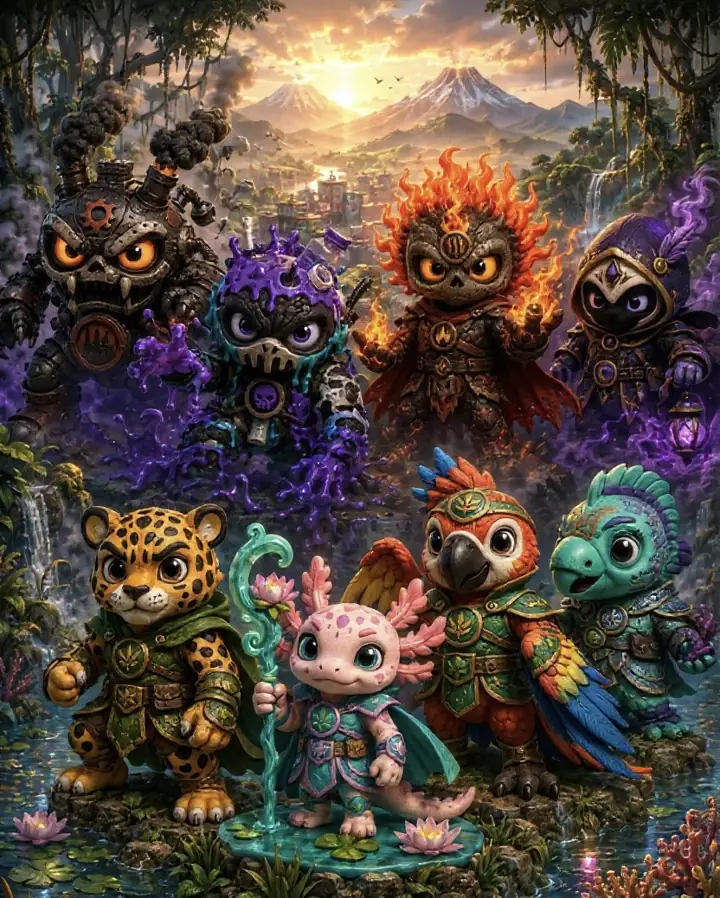
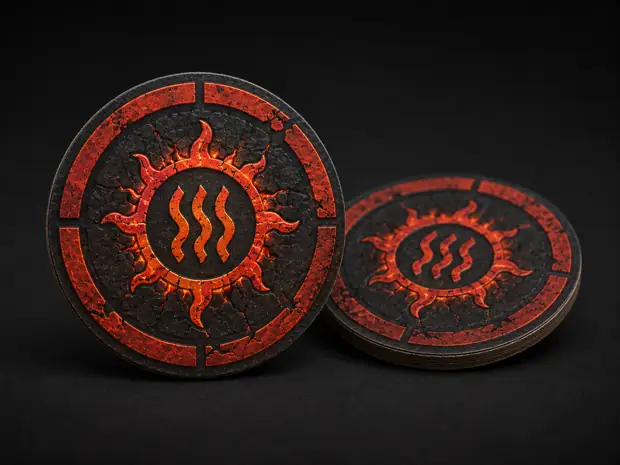
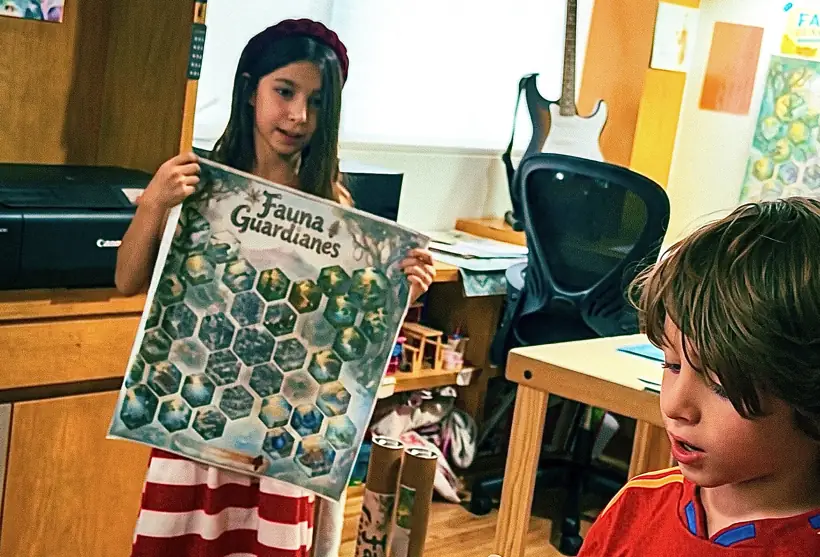
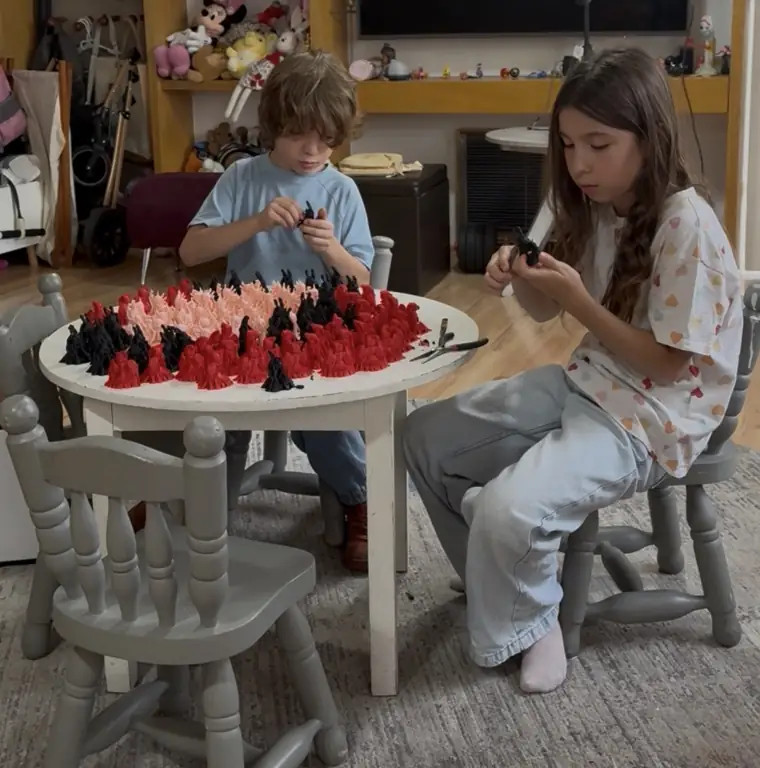
Three cards for each Guardian: bad news, good news and a challenge. This is how you play, and this is how it makes sense.
Relict mangrove · San Pedro River
RIZELA, the red mangrove
What is happening
The machines come in along the new track and knock down forest to open pasture. Every week the green gives back a stretch. The mangrove that grows hours from the sea is left lonelier, hemmed in by grass and wire. They haven't touched it yet: first they take the forest around it.
What does work
They put up a simple fence so the cattle no longer come down among the roots. Within a few months, where there was trampled mud, hundreds of new seedlings appear. The next generation of mangrove finally has somewhere to grow.
What is up to you
I turn off the tap while I soap up or brush my teeth.
Meet RIZELAWetland corridor
XIKNAL, the roseate spoonbill
What is happening
In the flock there's a spoonbill paler than the rest, almost white where it should be deep pink. It isn't sick with anything you can see: the water where it feeds no longer gives what it gave. This bird's pink is lit by what it swallows; when the wetland dims, so does she.
What does work
They used to be hunted for their pink feathers. Today no one on the lagoon shoots at them: they found that a living spoonbill, crossing the sky at sunset, draws more eyes than any ornament.
What is up to you
I don't drop litter or cigarette butts on shores, rivers, lagoons, or beaches.
Meet XIKNALRiver–sea corridor
CENTOR, the snook
What is happening
It's the closed season: the snook gather to spawn, and that's why fishing them is banned. But right now is when they're easiest to catch, bunched together. Someone goes out at night to cash in. In a few hours he takes the ones that were going to fill the sea next season.
What does work
The fisherman swapped his tight-mesh net for one with a wide eye. The small ones slip out and keep growing; he takes only what's fair. Fewer fish today, many more tomorrow.
What is up to you
When I eat fish, I ask where it comes from and avoid any that's in closed season or undersized.
Meet CENTORTall rainforest
BRAMOR, the black howler monkey
What is happening
Every dawn, the howler monkeys answer one another from hill to hill with a howl heard for kilometers. Once many voices replied; now, each year, fewer answer. It isn't that they howl more softly: it's that fewer throats remain. The forest's chorus fades little by little, one voice at a time.
What does work
Before clearing his plot, a farmer marks the trees whose fruit the monkeys eat and leaves them standing. When the troop passes, it finds the table set and moves on, at ease.
What is up to you
I don't take photos or selfies with wild animals used as an attraction.
Meet BRAMORFlowering network · stingless beekeeping
MELITA, the Melipona bee
What is happening
They spray the crop against pests and the fine cloud settles on the surrounding flowers too. The melipona bee comes to that flower as it does every day, looking for pollen. It doesn't see the poison; it carries it to the hive on its legs. There was no attack on the bees: it was enough to spray the flower where they feed.
What does work
The hollow log had sat empty for years. A stingless beekeeper moves in a colony rescued from a fallen tree. Within weeks, the entrance hums again: the log hive has its owners back.
What is up to you
I have at least one flowering plant for bees on my windowsill, in my yard, or on my plot.
Meet MELITAXochimilco
AXO, the axolotl
What is happening
There are cities where water no longer comes from the tap every day. And they aren't desert cities: it happens when more is drawn out than comes back, the ground that refilled it gets paved over, and thirst grows — all at once.
What does work
When a canal is cleaned, its banks restored, and pollution kept from coming back, life can return on its own. First come plants and insects; later, if the water holds, the pickier animals return. Water answers when it's finally let breathe.
What is up to you
I don't buy axolotls or aquarium species taken from the wild.
Meet AXOMaya Forest
BALAM, the jaguar
What is happening
The forest doesn't vanish overnight: it thins from the edges, tree by tree, with no one announcing it. And the numbers always count what's already been cut — never what's already wounded.
What does work
In some places they built crossings under the roads so animals could pass safely — and the animals found them on their own. Sometimes the solution was right underneath the very road that caused the problem.
What is up to you
I don't buy skins, fangs, or parts of wild animals.
Meet BALAMCloud Forest
LUMA, the macaw
What is happening
Some birds that come back every year didn't arrive this year. Nobody announced they were leaving; they just stopped showing up. The trouble builds in several places at once — where they winter, where they rest, where they breed — and there's no single culprit.
What does work
A flock of scarlet macaws crosses the cloud forest where last year there were none to be seen. No one released them: they came back on their own, as soon as the forest became a forest again. If LUMA is here, something up there is healing.
What is up to you
I don't buy wild birds, eggs, or nests as pets.
Meet LUMAMesoamerican Reef
CORAL
What is happening
Coral isn't one color by accident: its shade comes from tiny algae living inside it. When the water gets too hot, it expels them and turns white — alive, but in debt. If the heat eases in time, it gets them back; if it drags on, it doesn't. Each heat wave leaves less room for the next.
What does work
Some people grow coral the way you tend a garden: they hang fragments on underwater structures and let them grow, protected, until they plant them on a damaged reef. A piece the size of a finger can become a colony in a few years — it doesn't replace what was lost, but it speeds up what the sea would do in far longer.
What is up to you
I use oxybenzone-free sunscreen or cover up with clothing and a hat.
Meet CORALUpper Gulf of California
VITA, the vaquita
What is happening
VITA asks with clicks and almost everything answers: the rock, the fish, the seafloor. A nylon net sometimes answers late, or sideways. Her sonar doesn't always save her. And she breathes air: if the net won't let her rise, the whole sea becomes a ceiling.
What does work
Observers recognize her by her bent fin: they call her Frida. In 2023 she was swimming with a calf. In 2025 she showed up again, and beside her, once more, a smaller back. With so few left, a mother who does it again isn't an anecdote: she's the news.
What is up to you
At the seafood place I ask how the shrimp was caught; if nobody knows, I order something else.
Meet VITA, the vaquita